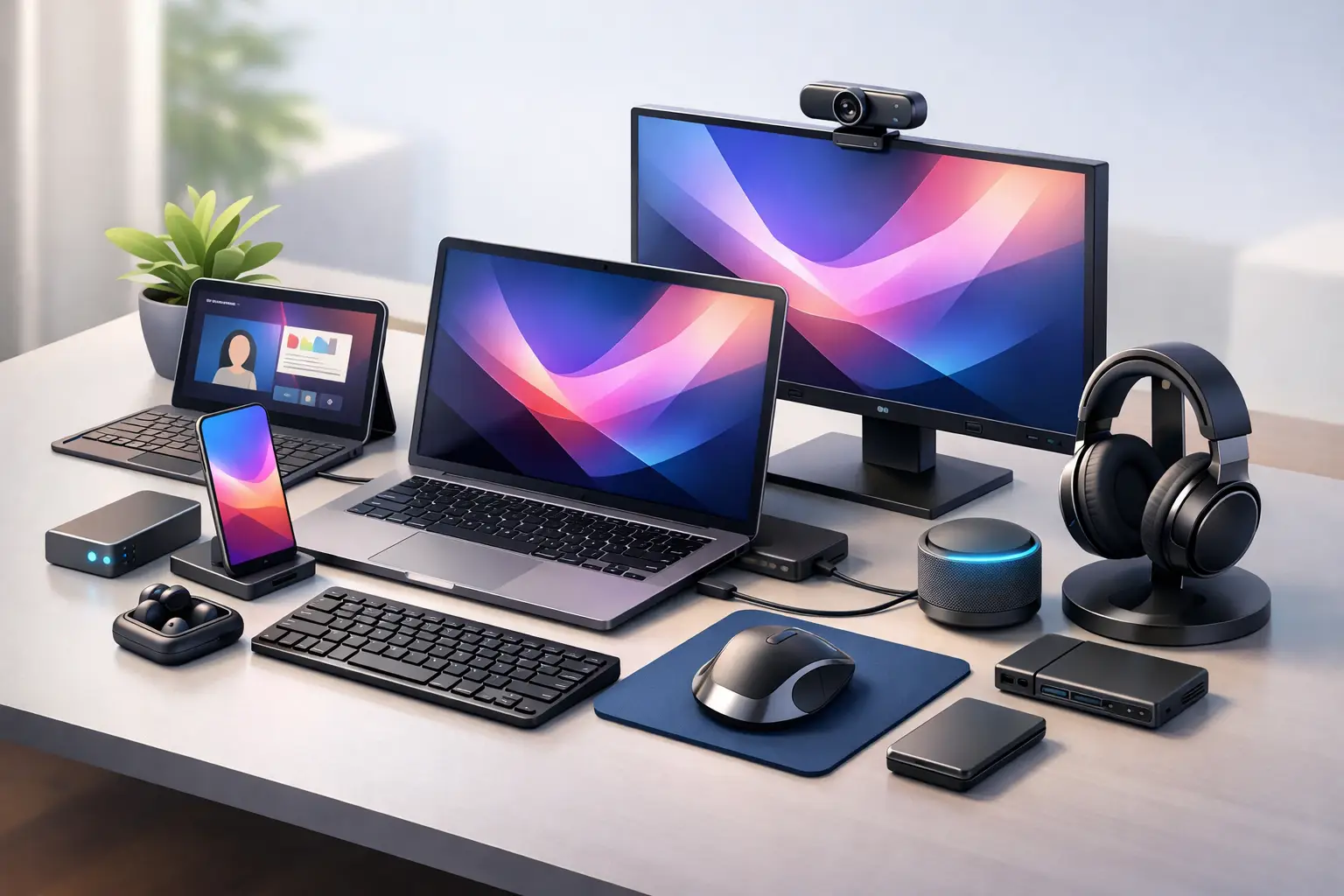
A computer that was fine for occasional email can feel painfully slow once it becomes the center of your workday. Video calls freeze, files take too long to open, and a crowded desktop makes even simple tasks frustrating. The best remote work computer upgrades solve the bottleneck you actually have, rather than adding expensive parts that will not change your day.
For most home office workers in Salt Lake City, the smartest improvements come down to speed, memory, connection quality, and a workspace that supports long hours. Start with the problem you notice most often, then choose an upgrade that gives a clear return in saved time and reduced stress.
Best Remote Work Computer Upgrades for Daily Speed
Replace a hard drive with an SSD
If your computer takes several minutes to start, programs hang while opening, or you see constant disk activity, an old mechanical hard drive may be the reason. Replacing it with a solid-state drive, or SSD, is one of the most noticeable upgrades available for many desktops and older laptops.
An SSD makes startup, logins, file searches, application launches, and updates substantially faster. It does not make an underpowered processor perform like a new one, but it removes the slow waiting that makes an older computer feel unusable.
The trade-off is capacity and compatibility. Large SSDs cost more, and some thin laptops use drive formats that are not easily replaceable. A technician can confirm whether your device supports a new drive, move your files safely, and make sure Windows or macOS is configured correctly afterward. Do not assume a drive swap is just a matter of installing hardware. Data transfer and operating system setup matter just as much.
Add more RAM for multitasking
Remote work often means running a browser with 20 tabs, email, chat, video meetings, spreadsheets, cloud storage, and business software at the same time. When a computer runs short on memory, it starts relying heavily on the drive for temporary storage. That is when switching between programs becomes slow and video calls may stutter.
For basic office tasks, 8GB of RAM may still work, but 16GB is a more comfortable target for many remote workers. People who work with large spreadsheets, design files, multiple displays, virtual machines, or data-heavy applications may need 32GB or more.
RAM is usually a cost-effective upgrade, but not every laptop allows it. Many newer lightweight models have memory soldered directly to the motherboard. Before buying anything, check the system model and its maximum supported memory. Adding incompatible RAM creates another problem rather than fixing the first one.
Consider the processor only when the work demands it
A faster processor helps with video editing, software development, complex accounting files, 3D work, and demanding multitasking. It can also improve meeting performance if your current computer struggles whenever you share your screen or use virtual backgrounds.
However, processor upgrades are often impractical in laptops and may require a new motherboard in desktops. If the processor is the true limitation, replacing the computer can be more sensible than rebuilding an aging system piece by piece. This is especially true when the machine also needs a battery, storage, memory, and operating system support.
Make Video Calls Clearer and Less Frustrating
A reliable remote work setup is not just about how fast your computer feels. Clients and coworkers judge meetings by what they can see and hear. A modest accessory upgrade can make a bigger difference than a premium webcam plugged into a struggling computer.
Use a dedicated webcam when the built-in camera is weak
Many laptop cameras produce soft, grainy video, especially in rooms with limited natural light. A dedicated 1080p webcam can improve image quality, framing, and consistency for meetings. Look for a model that works well in normal indoor lighting instead of focusing only on the highest resolution listed on the box.
Before replacing the camera, check your lighting. A simple desk light placed in front of you can improve your image more than a camera upgrade alone. Avoid placing a bright window directly behind you, since it can turn your face into a silhouette.
Upgrade your microphone before your speakers
People will forgive a slightly imperfect video feed. They are much less patient with muffled audio, echoes, keyboard noise, or a microphone that cuts in and out. A USB headset or dedicated USB microphone gives most remote workers clearer audio than a laptop’s built-in microphone.
Headsets are often the practical choice for shared homes, busy offices, or frequent calls because they reduce echo and keep conversations private. A desktop microphone can sound excellent, but it works best in a quiet room and usually needs careful placement. If you spend much of the day in meetings, choose comfort and microphone clarity over extra features you will rarely use.
Improve Wi-Fi Before Blaming Your Computer
A slow or unstable connection can look exactly like a computer problem. Frozen calls, delayed cloud syncs, dropped VPN connections, and sluggish downloads may be caused by weak Wi-Fi coverage, router placement, interference, or an aging network device.
If possible, connect a work desktop or regular meeting location to the router with an Ethernet cable. A wired connection is usually more stable than Wi-Fi and can prevent many video-call issues. When wiring is not practical, a modern Wi-Fi adapter, mesh system, or better-positioned router may help.
Do not place the router in a basement corner, inside a cabinet, or behind large metal objects. In Utah homes with multiple floors or thick walls, one router may not cover every room well. A network assessment can identify whether the issue is internet service, wireless coverage, outdated equipment, or a device-specific problem.
For small business owners working from home, network security deserves attention too. Keep router firmware current, use a strong unique Wi-Fi password, separate guest devices when possible, and avoid using an old router that no longer receives security updates.
Add a Second Monitor for More Usable Workspace
A second monitor is one of the best remote work computer upgrades for people who constantly switch between documents, email, spreadsheets, accounting software, and browser windows. It does not increase computer speed, but it can reduce the wasted time and mental fatigue caused by resizing and hunting for the right window.
For most office work, a 24-inch or 27-inch monitor with a 1080p or 1440p resolution is a practical starting point. Higher resolution provides sharper text and more room for documents, but it also costs more and may be harder for an older laptop to drive smoothly.
Check your computer’s video outputs before purchasing a monitor. USB-C, HDMI, DisplayPort, and docking stations are not always interchangeable. Some laptops support only one external display, while others need a compatible dock to run two. Getting the right cables and configuration at the start avoids the common frustration of buying equipment that will not connect properly.
Do Not Ignore the Comfort Upgrades
The equipment that supports your body can be just as valuable as the equipment inside your computer. A monitor positioned too low encourages neck strain. A laptop keyboard used all day can lead to awkward wrist angles. Poor seating turns a normal workday into an ache that follows you into the evening.
Raise your screen so the top portion is near eye level, use an external keyboard and mouse when working on a laptop for long periods, and set up your chair so your feet are supported. These changes do not need to be elaborate. They need to fit the way you actually work.
A laptop stand paired with a keyboard and mouse is an affordable way to create a better home office without replacing the laptop. For workers who move between rooms, it also makes it easier to keep one consistent, comfortable setup.
When an Upgrade Is Not the Right Answer
Not every slow computer should be upgraded. A device that cannot run supported security updates, has recurring hardware failures, overheats, or needs several major parts may be at the end of its useful life. Putting money into it can be reasonable for a short-term fix, but it may not be the best value.
The same applies when the upgrade is limited by the device design. A laptop with soldered memory, restricted storage access, a failing battery, and an older processor may be better replaced with a system chosen for your current workload. The goal is not to buy the most expensive computer. It is to get reliable performance for the next several years.
Before purchasing parts, get a clear diagnosis of what is causing the slowdown. Don’t Panic! Computer Repair can check your computer, home office setup, and network on-site, then explain which upgrade makes sense and what it will cost. A good upgrade should leave you with a calmer workday, not a new collection of technical problems.