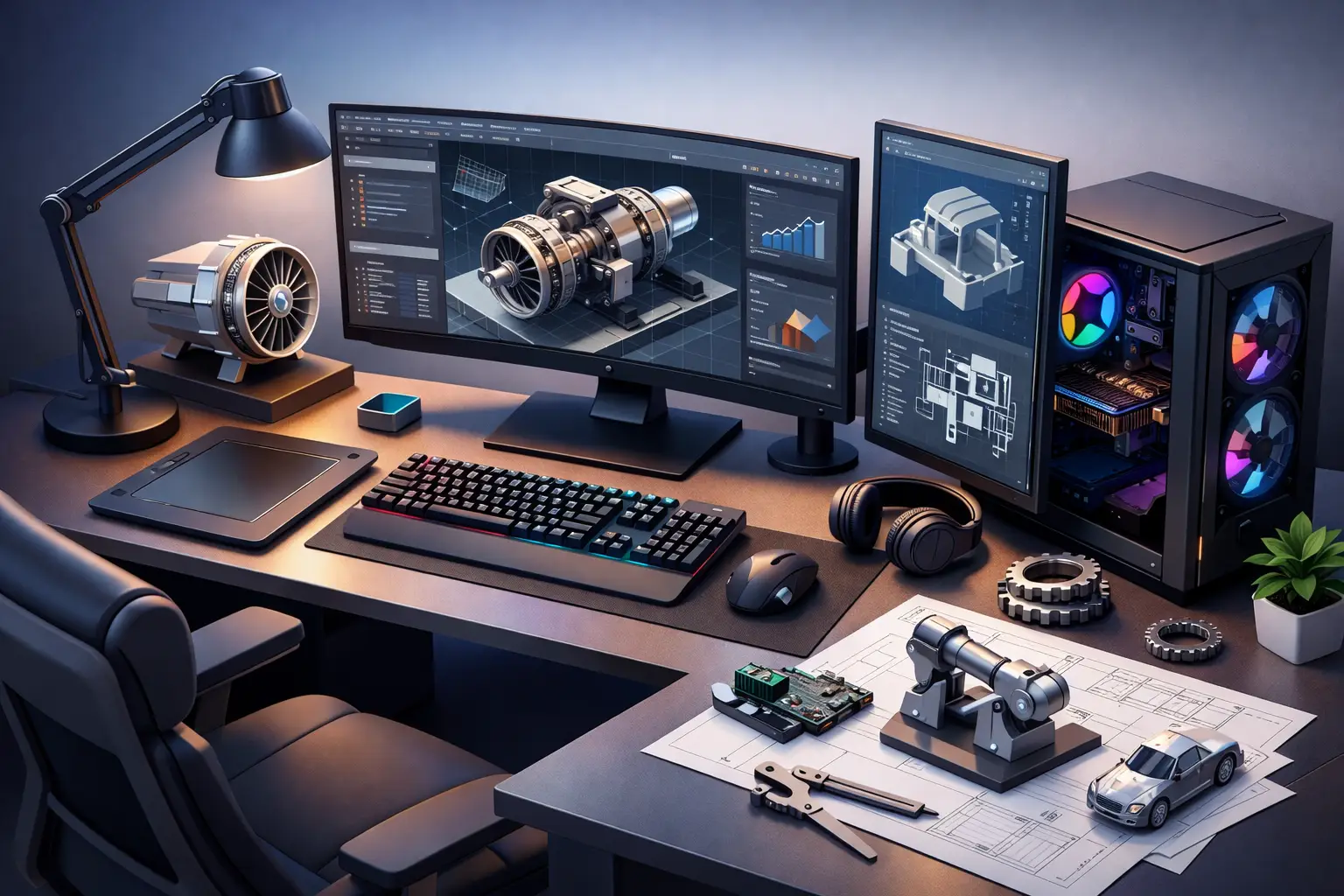
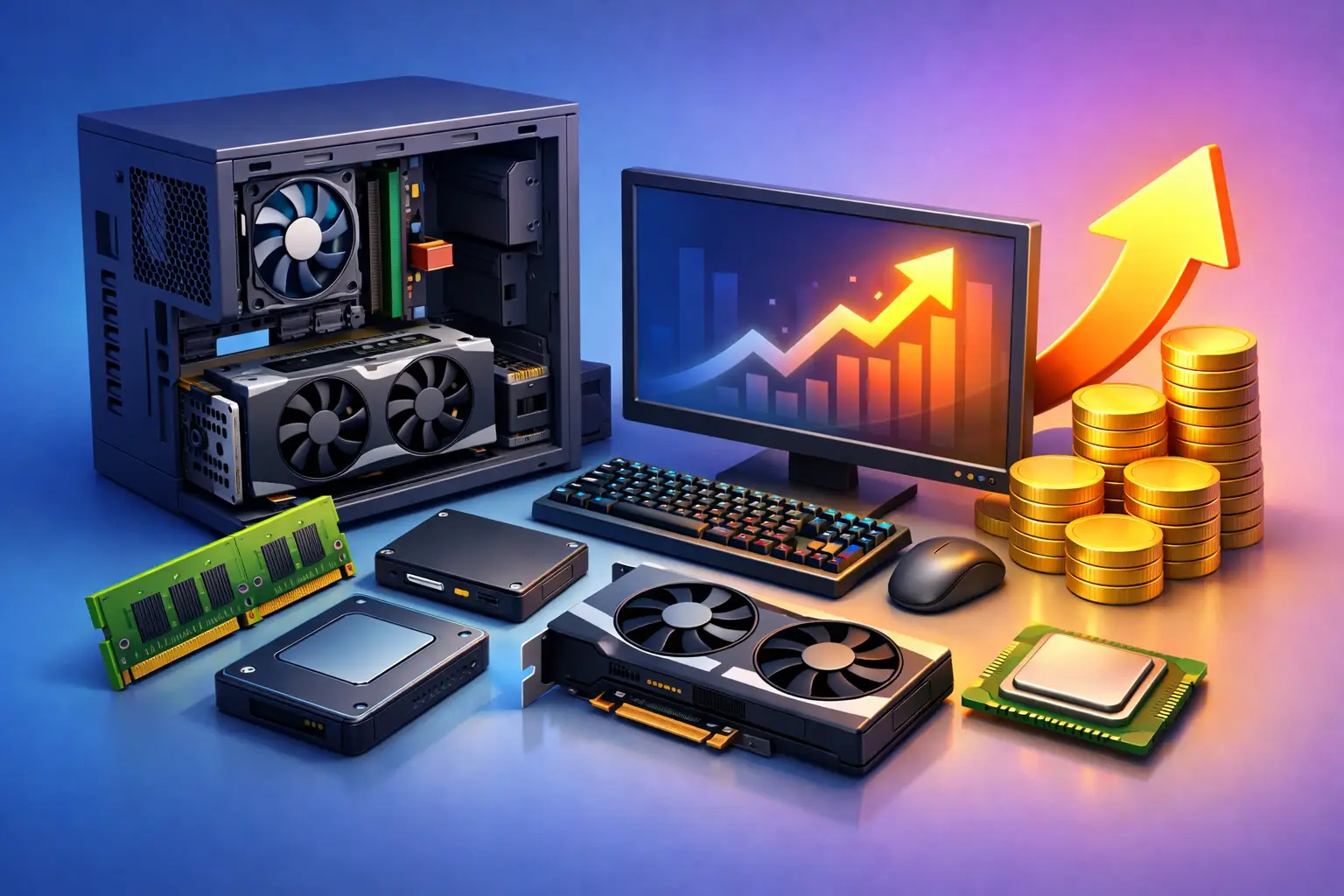
A slow computer does more than test your patience when you work in CAD, 3D modeling, simulation, or technical design. It delays revisions, interrupts rendering, and can turn a simple client change into an after-hours problem. The right engineering workstation build is not about buying the most expensive parts. It is about matching the computer to the software, files, and workloads that keep your work moving.
For Salt Lake City engineers, designers, architects, and small businesses, that usually means starting with the work itself. A workstation that is perfect for a SolidWorks assembly may be the wrong fit for a simulation-heavy workflow or a machine that spends most of its day compiling code and running virtual machines. A clear plan upfront prevents wasted money and frustrating performance gaps later.
Start an Engineering Workstation Build With Your Software
Before choosing a processor or graphics card, identify the programs the workstation must run every day. Common workloads include AutoCAD, Revit, SolidWorks, Fusion, Inventor, Civil 3D, MATLAB, ArcGIS, Adobe applications, rendering tools, and simulation software. Each program uses computer hardware differently.
Many CAD applications rely heavily on fast single-core processor performance while you model, sketch, and edit drawings. Rendering, analysis, compilation, and simulation tasks may use many CPU cores at once. Some 3D workflows benefit greatly from a capable GPU, while other programs gain little from an expensive graphics card. That distinction matters because a balanced workstation is faster in real use than a machine with one premium component and several weak ones.
File size matters too. A workstation that handles small drawings smoothly may slow down when opening large assemblies, point clouds, high-resolution aerial imagery, or complex building models. If projects are expected to grow over the next few years, leave room for additional memory and storage rather than building at the minimum requirement.
Choose the Parts That Affect Daily Performance
Processor: Speed First, Then Core Count
The CPU is the foundation of most engineering workstations. The best choice depends on whether your applications favor high clock speeds, high core counts, or a mix of both. For general CAD and design work, a modern processor with strong single-core performance is often the best value. For finite element analysis, video rendering, code compilation, or multiple simultaneous workloads, more cores can save substantial time.
Do not select a processor based on core count alone. A 24-core CPU sounds impressive, but it may not make interactive modeling faster than a lower-core processor with better per-core speed. On the other hand, choosing an entry-level CPU for heavy simulation can leave expensive engineering software waiting on hardware. The right answer depends on how your team actually works, not on a spec sheet headline.
Memory: Avoid the Constant Slowdown
RAM gives active programs room to work. When the system runs short on memory, it starts using the storage drive as temporary memory. That is much slower and commonly causes lag, freezing, and long load times.
For many professional workloads, 32GB is a sensible starting point. Complex CAD assemblies, large Revit models, GIS work, rendering, analysis software, and several applications open at once may justify 64GB or 128GB. More memory is not automatically better, but insufficient memory is one of the most common workstation bottlenecks.
Choose a motherboard that supports future upgrades, especially if your workload is likely to expand. It is usually easier to add memory later than to replace the entire platform.
Graphics Card: Match It to the Application
A dedicated graphics card is valuable for 3D modeling, real-time visualization, GPU rendering, and large high-resolution displays. The key is compatibility, not just raw gaming performance. Some professional applications are designed and tested around workstation-class graphics cards and certified drivers. Others run very well on high-end consumer cards.
If your software vendor recommends certified hardware, follow that guidance when reliability is the priority. Certified drivers can reduce visual glitches and improve stability in professional programs. If the system is focused on rendering or visualization, GPU memory and compute performance may deserve a larger share of the budget.
For standard 2D CAD, office work, and light 3D tasks, spending too much on a graphics card can pull money away from the processor, memory, storage, or backup equipment that would make a bigger difference.
Storage: Fast Working Files and a Backup Plan
A solid-state drive is essential for a professional workstation. A fast NVMe SSD improves startup times, program loading, file access, and project transfers. For most builds, use a primary SSD for Windows and applications, then consider a second SSD for active project files, scratch space, caches, or local virtual machines.
Capacity should reflect your real project sizes. A nearly full drive slows down maintenance and leaves little room for temporary files. It also creates pressure to store critical work in random locations. Keep active files organized, and make sure they are backed up to a separate local device, server, or managed cloud service.
One fast drive is not a backup. A failed drive, accidental deletion, ransomware event, or corrupted project can stop work just as quickly as a hardware failure. For a business workstation, backup planning belongs in the build conversation from the beginning.
Do Not Overlook the Parts Around the PC
Workstation performance is not limited to the tower. The monitor, network, power protection, cooling, and peripherals affect productivity every day.
A quality monitor with enough screen space can reduce switching between drawings, spreadsheets, emails, and reference documents. Many engineering professionals work better with two displays or one large high-resolution display, but the right setup depends on desk space and application layout. Color-sensitive design work may also need a monitor with reliable color accuracy.
Wired networking is preferable when moving large files or working from a local server. If your office uses shared project folders, slow Wi-Fi can feel like a computer problem even when the workstation itself is fine. A properly configured network, firewall, and backup system protect the investment in the workstation.
Cooling and power are easy to ignore until they cause trouble. A high-performance CPU and GPU generate heat, particularly during rendering or analysis jobs that run for hours. A suitable case, quality power supply, and effective cooling help prevent thermal throttling, random shutdowns, and premature component wear. An uninterruptible power supply is also worth considering when sudden outages could damage work or interrupt a long calculation.
Budget by Workload, Not by Marketing
A practical engineering workstation build often has three spending priorities: the CPU and memory for the software you use, the graphics card for 3D or GPU-based work, and fast, adequately sized storage. After that, budget for reliability, data protection, and expandability.
Avoid paying for features that will never be used. Extreme RGB lighting, oversized gaming components, and top-tier GPUs can be unnecessary for a workstation focused on 2D CAD or business applications. At the same time, cutting corners on the power supply, cooling, motherboard, or storage can create difficult-to-diagnose problems that cost more in downtime than the original savings.
For a small business, standardizing workstation configurations can simplify support. Similar systems are easier to maintain, update, troubleshoot, and replace when someone has an urgent deadline. Keep records of installed components, software licenses, warranty details, and backup settings.
When a Custom Build Makes Sense
A custom workstation makes sense when off-the-shelf computers force you to compromise on memory capacity, graphics compatibility, storage layout, future expansion, or budget. It can also be the better choice when you need a system built around one demanding program rather than a general-purpose office computer.
However, custom does not mean complicated. The goal is a stable machine with compatible parts, clean cable management, current drivers, correct BIOS settings, and testing before it becomes your daily work computer. The system should be set up for your actual workflow, including account security, software installation, printer access, shared folders, remote access, and backups.
If you are unsure whether your current computer needs an upgrade or replacement, start with a diagnosis instead of guessing. Slow performance can come from failing storage, overheating, insufficient RAM, malware, network issues, or a configuration problem. Don’t Panic! Computer Repair can assess the situation on-site, explain the options clearly, and help build a workstation that fits the work in front of you.
Your workstation should disappear into the background when a deadline is close. If it is making you wait, crashing under load, or limiting the projects you can take on, a properly planned upgrade can give you back more than speed – it can give you a more dependable workday.